

| Table of Contents |  |
|
Original Article
| ||||||
| Functional outcome of suboccipital craniectomy without dural opening for chiari malformation using a novel scoring system: A single centre experience | ||||||
| Joseph Merola1, Paul Leach2, Shafqat Bukhari2 | ||||||
|
1Clinical Observer, Department of Neurosurgery, Heath Hospital, Cardiff, United Kingdom.
2Neurosurgeon, Department of Neurosurgery, Heath Hospital, Cardiff, United Kingdom. | ||||||
| ||||||
|
[HTML Abstract]
[PDF Full Text]
[Print This Article]
[Similar article in Pumed] [Similar article in Google Scholar] |


| How to cite this article |
| Merola J, Leach P, Bukhari S. Functional outcome of suboccipital craniectomy without dural opening for chiari malformation using a novel scoring system: A single centre experience. Edorium J Neurosurg 2015;1:1–5. |
|
Abstract
|
|
The surgical management of Chiari type I malformation remains controversial. We looked at functional outcome using a novel, Chiari-specific, outcome assessment tool of suboccipital craniectomy without dural opening in our cohort of patients. We retrospectively reviewed all patients who underwent the described operative technique between 2008–2012. Sixteen patients were included in our cohort and the majority of patients reported Valsalva headache as a primary symptom. Most patients reported overall improvement following surgery and 56% showed functional improvement according to the Chiari-speci?c assessment tool. All patients reported improvement or resolution of Valsalva headache following surgery and we believe suboccipital craniectomy alone should be considered for those with headache as the sole presenting symptom.
| |
|
Keywords:
Arnold-Chiari, Chiari malformation, Foramen magnum decompression, Posterior fossa decompression, Suboccipital decompression
| |
|
Introduction
| ||||||
|
Chiari I malformation (CM-I) is a disorder of the hindbrain characterised by the descent of the cerebellar tonsils through the foramen magnum. It is a condition first classified by the Austrian pathologist, Hans Chiari, in late 19th century [1] and clinically manifests with often vague symptoms requiring high index of suspicion. The dominant symptom in most cases is Valsalva headache [2] [3]. Surgical treatment has remained controversial and without high level evidence in favor of a particular technique. Surgical options include suboccipital craniectomy alone, suboccipital craniectomy with duroplasty, with or without the opening of the arachnoidal membrane, lysis of intradural adhesions, partial tonsillar resection, plugging of the obex, leaving the dura open, and/or posterior fossa reconstruction with cranioplasty [4]. Assessment of surgical outcomes is complicated by the lack of validated or Chiari-specific assessment tools. Aliaga et al. published the Chicago Chiari Outcome Scale (CCOS) in 2012 providing a Chiari-specific approach to quantifying postsurgical outcomes [5]. The scale encompasses four categories (pain, non-pain, functional and complications) with a maximum possible score of 16 in total [5]. In our department, we understood the rationale for suboccipital craniectomy without dural opening i.e. shorter surgery time, shorter hospital stay, reduced risk and complications. We retrospectively applied the CCOS to our series of patients undergoing the above procedure to look at functional outcomes. We hope that this contributes to the refinement of the scoring tool. | ||||||
|
Materials and Methods
| ||||||
|
Patient Selection Procedure Technique Clinical Outcome Measures | ||||||
|
Results | ||||||
|
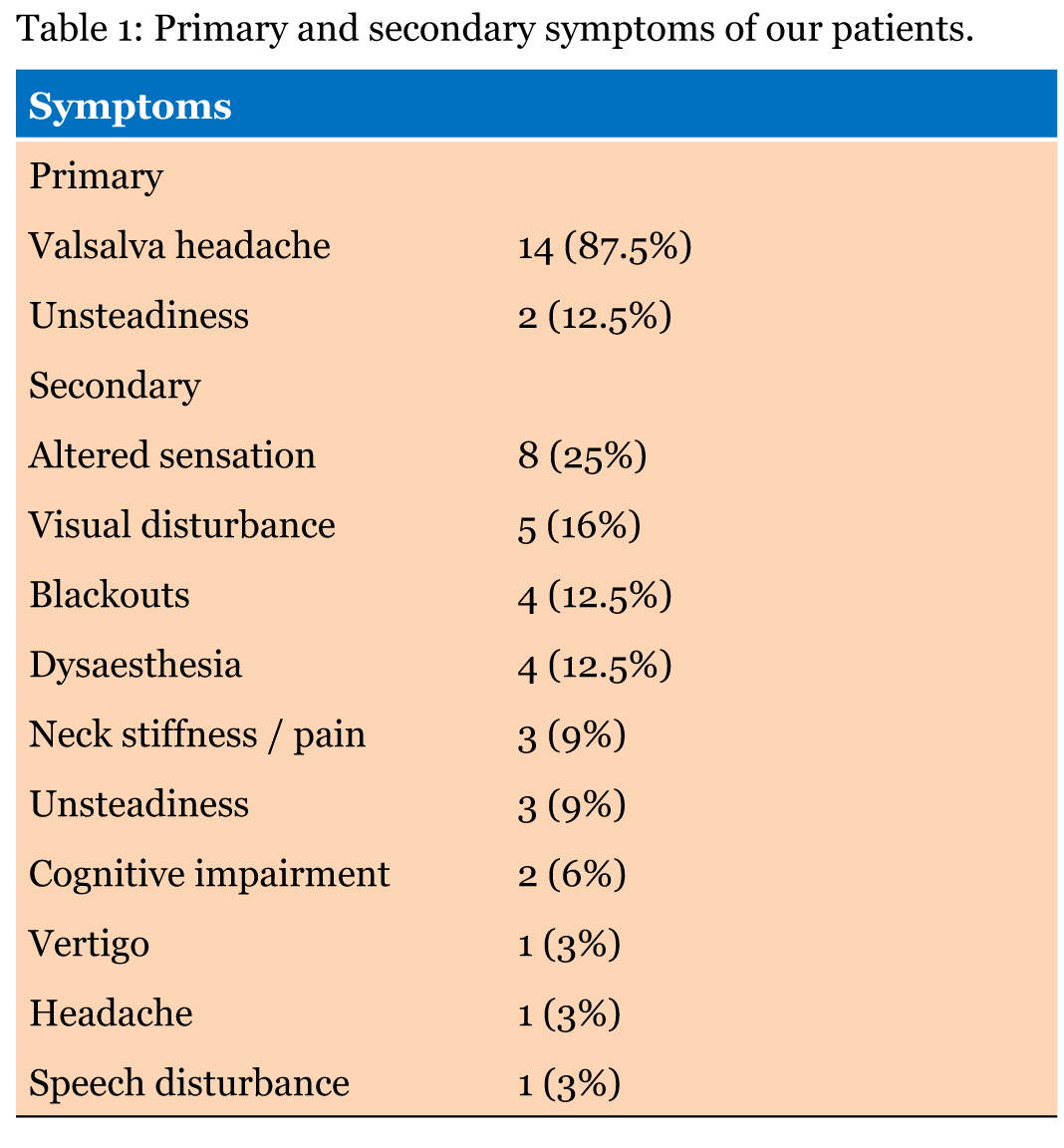
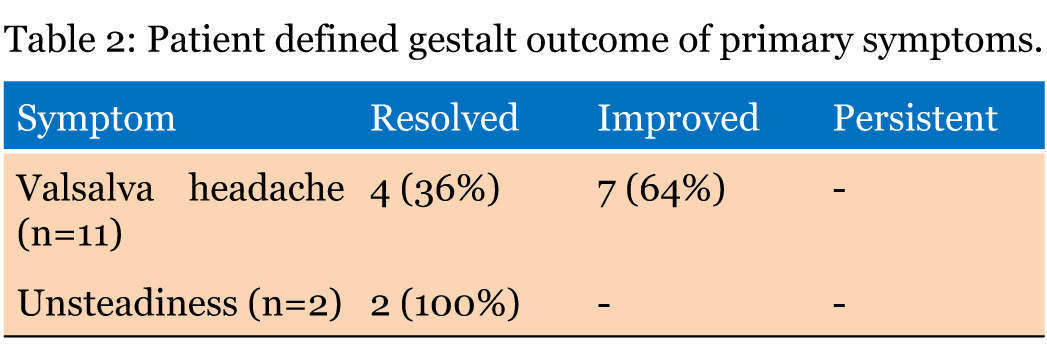
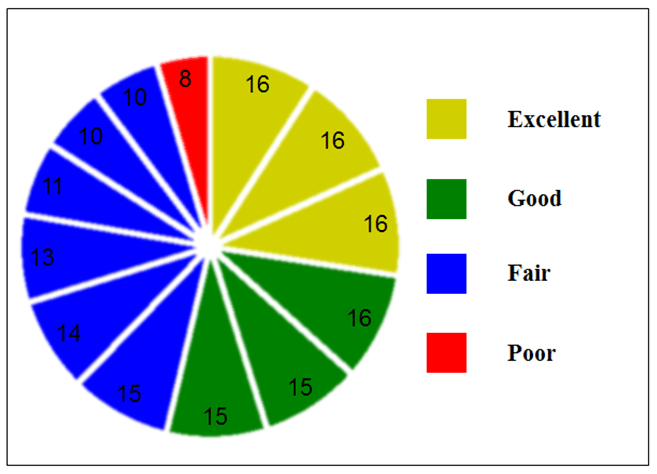
Patients Symptomology Clinical Outcomes There were no reported complications or mortalities in our series of patients. Four patients (25%) had recurrence of preoperative symptoms following surgery - by the time of interview three had already undergone repeat procedure with dural opening and expansile duraplasty (these patients were excluded from CCOS assessment) while one patient was on the surgical waitlist. The mean time for first documented recurrence of symptoms was thirteen months, ranging from four to twenty-five months. From the outcomes of surgery as defined by Odom's criteria, we observe that the majority felt they had a "fair" outcome following suboccipital craniectomy, i.e., definite relief of some preoperative symptoms; other symptoms unchanged or slightly improved. Chicago Chiari Outcome Score | ||||||
| ||||||
| ||||||
|
| ||||||
| ||||||
|
Discussion
| ||||||
|
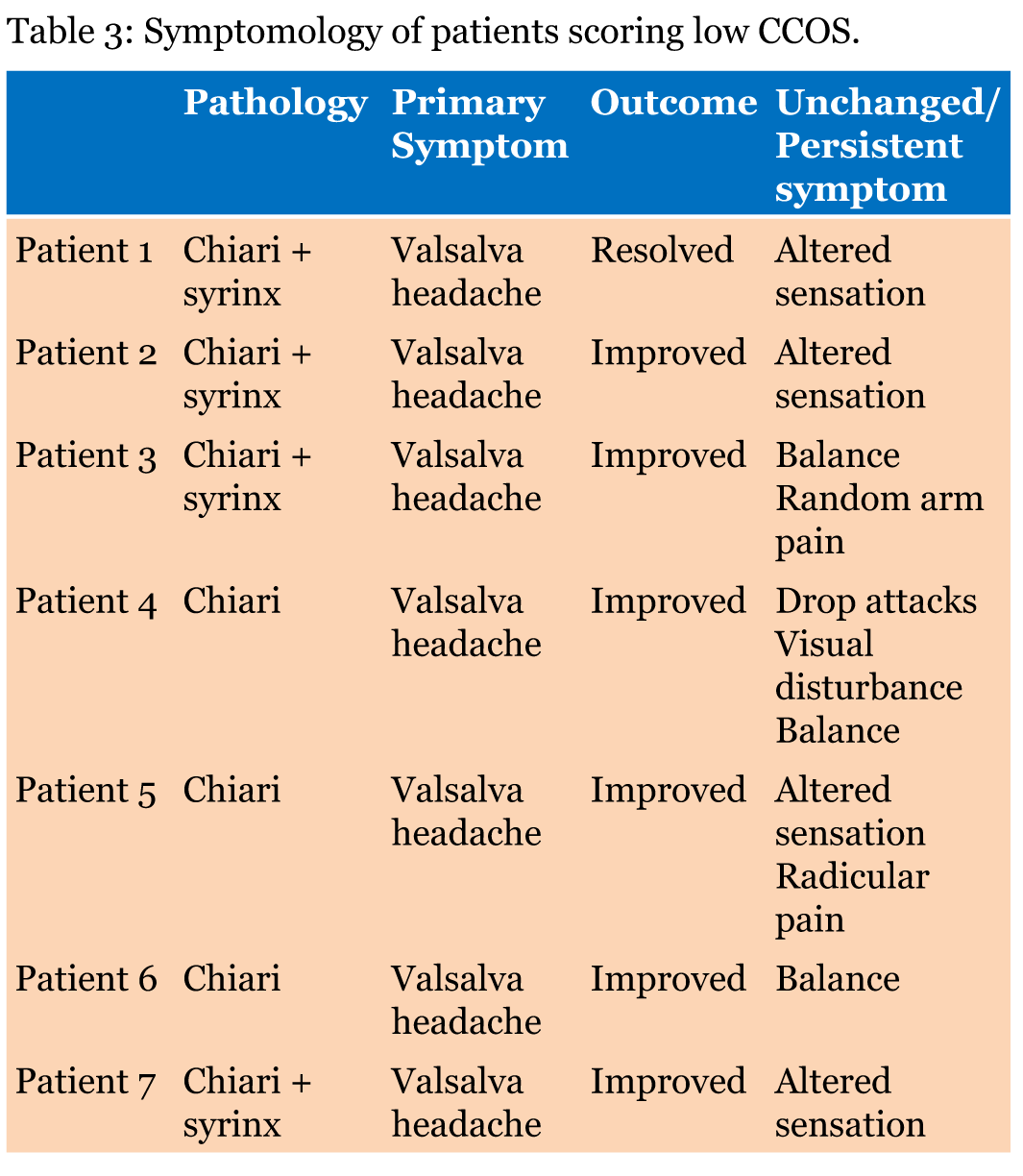
Using a novel scoring system, the Chicago Chiari Outcome Score (CCOS), we were able to quantify the functional outcome of suboccipital craniectomy without dural opening in a cohort of Chiari I malformation patients. Aliaga et al. compared CCOS scores with a gestalt group classifying patients as improved, unchanged or worse. They reported that "improved" patients generally scored between 13–16, "unchanged" patients between 9–12 while "worse" patients scored between 4–8 [5]. In our cohort, assuming that patients who had recurrence of symptoms requiring repeat procedure would score between 4–8 using CCOS (i.e., "worse" category), we can deduce that 56% (9/16) improved postoperatively while 44% (3/16 unchanged, 4/16 worse) did not benefit from the procedure. Table 3 outlines the findings in those patients who did not benefit from surgery. We observe that all patients reported improvement or resolution of primary symptom, in this particular case all reported Valsalva headache. It is secondary symptoms that were responsible for poor outcomes, in particular altered sensation. This is consistent with findings in a follow-up study to Aliaga et al. work. Hekman et al. used the CCOS to determine positive and negative predictors of good outcome and observed that sensory deficits correlated with lower CCOS scores [7]. Associated syringomyelia correlated with higher CCOS scores [7]; conversely four out of five of patients with syrinx in our cohort did not benefit from surgery. In recent literature, Parker et al. looked at one year outcomes of suboccipital craniectomy using validated patient-reported outcome measures. They observed a significant improvement in pain, disability, general health and quality of life following the procedure [8] . However, only 6% (3/50) of their cohort had no dural opening. The operative approach remains controversial. Several studies compare osseous decompression with and without dural opening. Erdogan et al. found that similar clinical outcomes were achieved between non-duraplasty and duraplasty groups [9]. A meta-analysis by Durham et al. looked at seven studies of a population sample less than 18 years of age, and concluded no overall significant difference between osseous decompression with and without duraplasty [10]. They noted higher recurrence rate when the dura was not opened but a higher rate of complication when it was. There were no complications noted in our cohort but we did observe a high recurrence rate at 25%. To our knowledge this study would be the first to report outcomes of suboccipital craniectomy without dural opening using a Chiari-specific assessment tool. Although our results favor the operative technique, we could not recommend to all Chiari sufferers based on this study. However, we noted that all patients reported improvement or resolution of Valsalva headache and that this was not responsible for recurrences or low CCOS. We feel that our results support suboccipital craniectomy without dural opening for those with Valsalva headache alone. Hayhurst et al. also offer similar conclusions in their study of 96 patients who underwent hindbrain decompression over an 11-year period [11]. | ||||||
| ||||||
|
| ||||||
|
Conclusion
| ||||||
|
The surgical treatment of Chiari I malformation still remains controversial. Using a novel Chiari-specific scoring tool, we found improved functional outcome in almost 60% of our cohort by bony decompression alone and that primary symptom was not responsible for recurrence or low CCOS. We believe that those with Valsalva headache alone should be managed with osseous decompression only in the first instance. | ||||||
|
References
| ||||||
| ||||||

|
[HTML Abstract]
[PDF Full Text]
|
|
Author Contributions:
Joseph Merola – Substantial contributions to conception and design, Acquisition of data, Analysis and interpretation of data, Drafting the article, Final approval of the version to be published Paul Leach – Substantial contributions to conception and design, Revising it critically for important intellectual content, Final approval of the version to be published Shafqat Bukhari – Substantial contributions to conception and design, Revising it critically for important intellectual content, Final approval of the version to be published |
|
Guarantor of submission
The corresponding author is the guarantor of submission. |
|
Source of support
None |
|
Conflict of interest
Authors declare no conflict of interest. |
|
Copyright
© 2015 Joseph Merola et al. This article is distributed under the terms of Creative Commons Attribution License which permits unrestricted use, distribution and reproduction in any medium provided the original author(s) and original publisher are properly credited. Please see the copyright policy on the journal website for more information. |
|
|